A friend mentions their child just started olympiad training, and you picture something intense and exam-like, but you are not sure what actually happens in the room. Math Olympiad Training teaches students to solve non routine problems through specific techniques, practised repeatedly across different question types, rather than drilling more of the same School Math sums. It works best for students who already understand their current syllabus and want to build deeper problem solving skills on top of it.
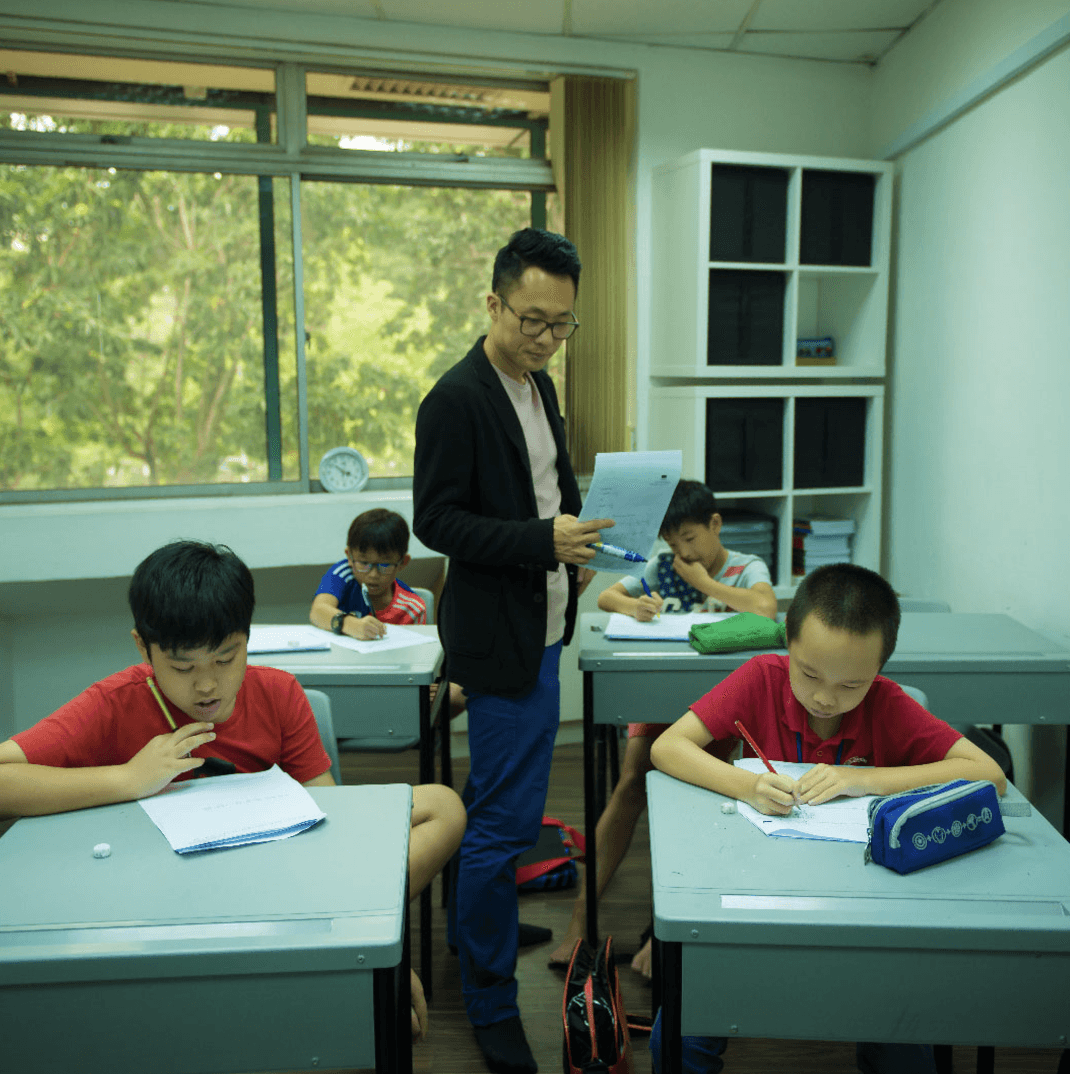
Lessons usually begin with a teacher introducing one problem solving technique, then working through examples that show how it applies. Students then practise questions using that same technique in slightly different forms, so the method sticks rather than being forgotten after one use.
Over several months, a student accumulates a set of these techniques they can draw on. When a new, unfamiliar question appears, they are not starting from zero. They are pattern-matching against tools they already have.
How Is This Different From a Normal Maths Lesson?
Regular school lessons are built around covering the syllabus, which mostly tests familiar question types. Olympiad training goes further, using questions closer to what actually appears in competitions like SASMO or NMOS. We go into more depth on this comparison in why choose Olympiad training over regular tutoring.
Here is the plain difference: school maths rewards recognising a question you have seen before. Olympiad training rewards figuring out a question you have never seen, using tools built from ones you have.
That difference in difficulty means the pace is faster too. A student used to routine sums can find the initial jump uncomfortable, which is why most programmes start with foundational reasoning before full competition style questions.
Who Actually Benefits From This Kind of Training?
Students with a solid grip on their current school syllabus tend to benefit most, since they can focus fully on new problem solving skills rather than also patching basic gaps. That said, training also suits students who simply enjoy a harder challenge and want to think about maths differently, regardless of where they currently rank.
A common worry is that this training is only for students "already good at maths." In practice, problem solving is a trainable skill, and many students improve significantly through consistent, structured practice rather than raw talent.
Student profile Fit for olympiad training
Strong school syllabus grasp, wants a challenge Strong fit, ready for full pace
Average school results, curious and motivated Fit with more foundation-building first
Weak school syllabus grasp Better to strengthen basics before starting
What Skills Does a Student Actually Walk Away With?
Beyond medals, students typically improve at breaking a large problem into smaller, manageable steps, and at spotting connections between topics that seem unrelated at first glance. These are not abstract benefits. They show up directly in Direct School Admission (DSA) math tests, since both test non routine thinking rather than memorised procedure.
T.K., a Primary 5 student who trained with us and earned a Mathlympics 2020 Silver, said the biggest change was learning to answer "problem questions with proper working shown," describing the tutor's approach of "asking me leading questions along the way" as what made it click.
Our Math Olympiad Training programme is built on an in-house curriculum refined yearly against actual competition formats, taught in small class size so teachers can guide students through harder questions individually rather than lecturing to a large group.
What Is the Honest Limit Here?
This training builds real thinking skills reliably. It does not guarantee a specific medal or ranking, since that also depends on the competition field each year and factors outside any programme's control.
If your hesitation is whether this adds too much on top of an already full school schedule, ask about pacing before committing. A well structured programme adjusts workload to complement school maths, not compete with it.
You can sign up for a trial lesson to see how a session actually runs.
FAQ
How long is a typical olympiad training lesson?
Lesson length varies by programme, but most run long enough to introduce one technique and work through several applied practice questions in the same sitting, rather than rushing through multiple topics.
Does my child need to already know algebra or advanced topics?
No, particularly at the primary level. Olympiad training at that stage focuses on logical reasoning and pattern recognition rather than advanced content ahead of the school syllabus.
What if my child loses interest partway through a term?
This usually signals the pace is mismatched, either too fast or too slow. A good teacher should adjust rather than push through, since motivation matters as much as content at this level.
Is one-on-one training better than Level Based training for olympiad prep?
Not necessarily. Level Based Classes allow students to hear different approaches to the same problem from peers, which often builds flexibility that one-on-one training alone does not offer.