In Singapore, it is common to hear parents discussing SASMO, medals, and DSA, leading many to wonder what this competition is truly about and if their child should join. The Singapore and Asian Schools Math Olympiad (SASMO) offers students a valuable opportunity to test their problem-solving skills beyond the scope of standard school examinations.
SASMO helps students see mathematics as more than just repetitive drills and worksheets. It rewards those who enjoy the thrill of deep thinking and tackling complex challenges. For many, it serves as their first serious step into the world of competitive mathematics.
SASMO Overview And Key Details
SASMO is one of the largest mathematics competitions in Asia, attracting hundreds of thousands of participants globally. With categories ranging from Primary 1 to Junior College 2, it is accessible to a wide demographic of students. The contest is administered through schools and authorised centres in Singapore and overseas, and is offered in either paper-based or online formats, depending on the local organiser.
Each year, SASMO develops unique contest papers that blend school-based curriculum with Olympiad-level challenges. The questions are specifically designed to stimulate critical thinking rather than the rote memorisation of formulas. High-achieving students are awarded medals and certificates, providing a recognised benchmark that can bolster school admissions and future academic prospects in mathematics.
What Makes The Asian Schools Math Olympiad Different?
Unlike a standardised test, where success depends on memorising and repeating steps, SASMO prioritises creativity and problem-solving through reasoning and logical thinking. The questions are often multi-step, rewarding students who can identify hidden patterns or apply clever shortcuts through deep reflection.
Importantly, although SASMO draws on some concepts from the school mathematics syllabus, its questions are more complex and require a higher level of reasoning and application. This balance between academic curriculum and contest-style challenges helps students build confidence rather than feeling overwhelmed. Many participants observe a noticeable improvement in their regular school mathematics performance after training for these competitions.
How The Singapore And
Asian Schools' Math Papers Are Structured
The SASMO papers depend on the grade level, though they aim to evaluate not only basic skills but also in-depth knowledge. Primary 1 students and those in the early primary levels respond to shorter, more directed questions, yet they still demand keen critical thinking. As students progress to higher levels, the problems become increasingly complex, requiring a more robust and analytical approach.
The exam usually runs for about an hour or slightly longer, depending on the level. Students are encouraged to rely on their understanding of mathematics concepts rather than calculators. This keeps the focus on reasoning and logical deduction instead of mechanical computation.
Role of the SASMO Advisory Council (SAC)
The SASMO Advisory Council (SAC) plays a pivotal role in upholding the high standards of the competition. With the support of this advisory council, the SASMO team spends many hours crafting papers that touch both school and Olympiad math. Each paper undergoes a rigorous review process to ensure the problems are intellectually stimulating yet appropriate for each grade level.
The involvement of the SAC ensures that parents and educators can remain confident in the educational value and integrity of the questions. Their strategic guidance allows SASMO to continue its growth as one of the most respected and widely recognised mathematics competitions in Singapore and throughout Asia.
Why SASMO Matters For Students’ Thinking Skills
Training for SASMO cultivates much more than just academic marks; it develops flexible thinking skills that are applicable across many subjects. Students learn to deconstruct complex problems, identify subtle patterns, and apply logical, step-by-step reasoning.
These analytical skills foster stronger performance in both school examinations and future academic competitions. Many students who begin their journey with SASMO gain the confidence to pursue advanced mathematics programmes and higher-level contests. For younger children—particularly those starting from Primary 1—this early exposure can spark a lifelong passion for problem-solving and critical inquiry.
How The Math Classroom Helps Students Prepare For SASMO
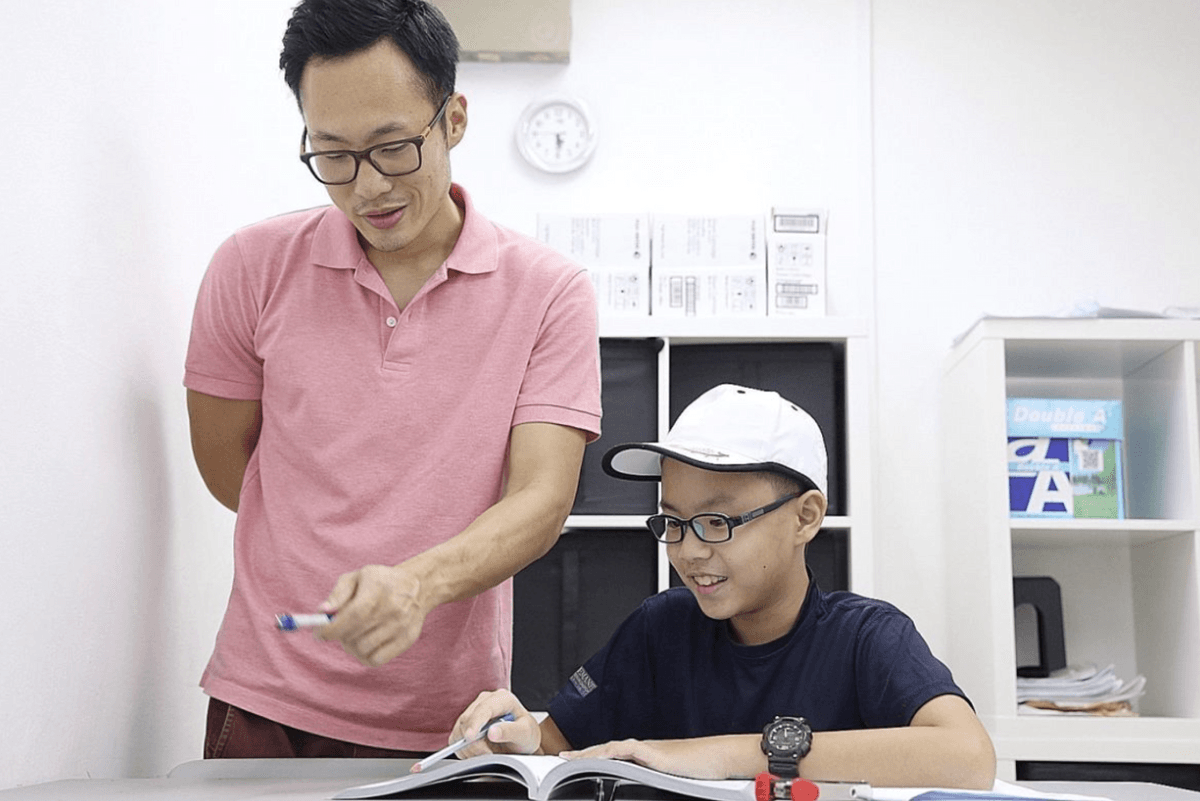
At The Math Classroom, the team assists students in preparing for the SASMO in an organised and student-friendly manner. Small group classes enable teachers to provide personalised attention and address weaknesses promptly. Students do get the opportunity to practise difficult SASMO-type questions and, at the same time, perform well in school mathematics.
Our curriculum integrates non-routine questions, model-based heuristics, and higher-order thinking strategies essential for success in SASMO. We emphasise a first-principles approach, teaching students to deconstruct problems step by step rather than simply searching for an answer. By avoiding 'shortcuts' that lack conceptual depth, we help students build genuine problem-solving resilience. Over time, this empowers them to approach complex challenges with confidence, ensuring they are fully prepared for the day of the contest.
Is SASMO Suitable For Your Child?
SASMO is ideal for students who possess a natural curiosity for mathematics, enjoy intellectual challenges, or require a structured framework to sharpen their critical thinking. It can be a good next step for primary and secondary students in Singapore who want more than standard homework. With the right guidance, even students as young as Primary 1 can reap the cognitive benefits of participating in the Singapore and Asian Schools Math Olympiad. At The Math Classroom, the team frequently assists parents in evaluating a child's readiness for such a contest and the kind of training that may be required. By establishing a clear, supportive plan, we transform SASMO from a daunting challenge into an inspiring milestone—a rewarding chapter in every child’s mathematical development.